

Industry
How Progressive Jackpots Work
Who pays for a progressive jackpot, how the meter grows and resets, what the odds look like, and when the maths can…
October 25, 2026
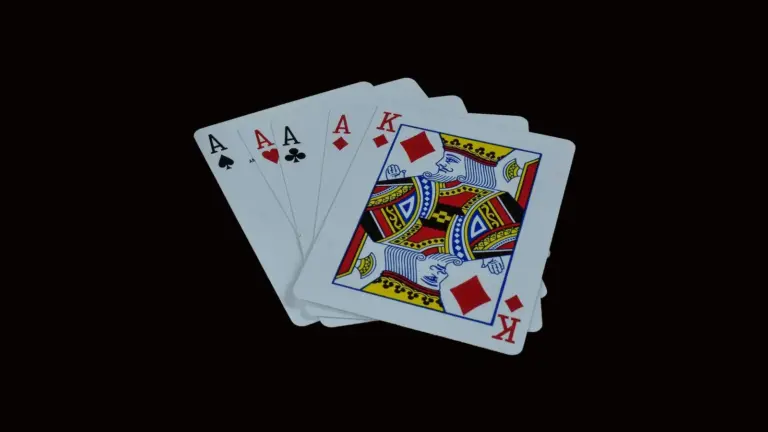
Photo: Vanessa V. / Pexels
How Jacks or Better pay tables work, why the five-coin bet matters, and the 16-step hold ladder that gets within 0.08% of perfect play.
Video poker strategy for Jacks or Better means holding the cards that give the highest expected return on each deal. On a full-pay 9/6 machine with five coins bet, correct play returns 99.54%, so the house edge is only 0.46%.
Jacks or Better is a single-player video poker game based on five-card draw. The player is dealt five cards, chooses which to hold, and draws replacements once. A pair of jacks or higher pays even money. The pay table decides the return: 9/6 pays 9 for a full house and 6 for a flush and returns 99.54% with optimal play, while 6/5 returns 95.00%. A 16-step hold ranking gets within 0.08% of perfect play. The royal flush pays 800 per coin only when five coins are bet.
Jacks or Better is the base video poker game. A machine deals five cards from one 52-card deck, the player holds any of them, and one draw replaces the rest. The final hand is paid from a fixed pay table, starting with jacks.
Unlike a slot, a video poker machine shows its pay table, and the card odds of a standard deck are known. The return of every hold decision can therefore be calculated. Hand order is covered in Poker Hand Rankings: Every Hand from Royal Flush to High Card. The Wizard of Odds table for 9/6 gives these frequencies (the “1 in” column is our conversion, 1 ÷ probability):
| Final hand | Pays per coin | Roughly 1 in |
|---|---|---|
| Royal flush | 800 | 40,390 |
| Straight flush | 50 | 9,148 |
| Four of a kind | 25 | 423 |
| Full house | 9 | 87 |
| Flush | 6 | 91 |
| Straight | 4 | 89 |
| Three of a kind | 3 | 13 |
| Two pair | 2 | 7.7 |
| Jacks or better | 1 | 4.7 |
| Nothing | 0 | 1.8 |
More than half of all hands (54.5%) end with nothing.
A Jacks or Better pay table is identified by its full house and flush payouts. “9/6” means 9 coins for a full house and 6 for a flush. Lower numbers in either row cut the return, while the other rows usually stay identical.
The Wizard of Odds return table gives these totals with optimal strategy. The loss column is our calculation: amount bet × (1 − return).
| Pay table | Return | Expected loss per $10,000 bet |
|---|---|---|
| 9/6 (full pay) | 99.54% | $45.61 |
| 9/5 | 98.45% | $155.02 |
| 8/6 | 98.39% | $160.73 |
| 8/5 | 97.30% | $270.16 |
| 6/5 | 95.00% | $500.39 |
Moving from 9/6 to 6/5 multiplies the expected loss by about 11. The RTP and house edge calculator converts any return figure the same way.
The Wizard of Odds figures show that one unit off the full house costs slightly more than one unit off the flush: 9/6 to 8/6 drops the return by 1.15 points, 9/6 to 9/5 by 1.09 points. Each of those gaps is more than 13 times the 0.08% lost by using the simple strategy instead of perfect play. Checking the pay table before the first hand therefore matters more than memorising rare strategy exceptions.
Betting five coins matters because the royal flush pays 250 per coin with one to four coins but 800 per coin with five, according to CardPlayer. The published 99.54% return for 9/6 Jacks or Better assumes the five-coin bet.
This is our approximation, because optimal strategy shifts slightly when the royal pays less. The practical rule holds: a smaller coin size with five coins beats a larger coin size with four.
The simple strategy for Jacks or Better is a ranked list of 16 holds published by the Wizard of Odds. The player finds the highest-ranked option in the five dealt cards and holds it. It returns 99.46% on 9/6, against 99.54% for perfect play.
We call it the hold-ladder method: read from the top and stop at the first rung the hand matches. A “high card” is a jack, queen, king or ace.
Strategy mistakes in Jacks or Better cost little when the simple strategy is followed. The Wizard of Odds puts its cost at 0.08%, or one total bet every 1,178 hands. Short pay tables and short coin bets cost far more than that.
Measured against 9/6 with perfect play, the gaps are: simple strategy 0.08 points, fewer than five coins about 1.4 points (our estimate), 8/5 2.25 points and 6/5 4.55 points. Even 99.54% leaves a house edge, and the Wizard of Odds standard deviation of 4.42 bets per hand means short sessions swing widely. Our guide to which casino games have the best odds compares that edge with other games.
Video poker is gambling for money, and every pay table listed here has a negative expected result. Real-money online video poker is legal only where online casinos are licensed. Set a loss limit before playing and use the tools on our responsible gambling page if play stops feeling like entertainment.
Video poker is random in the same legal sense as a slot: a random number generator picks the cards. Nevada Gaming Commission Regulation 14.040 requires each element of a game representing a live game to appear with the live game’s probability.
For video poker, the live game is a 52-card deck, so a machine that dealt royals less often than a real deck would breach the rule. Regulation 14.040(1)(a) also sets a 75% minimum payout per wager, far below any table above. Our RNG glossary entry explains the draw.
Jacks or Better is one of the few casino games where the player’s own decisions move the return by whole percentage points. Our editorial view: refuse any table below 9/6 where a 9/6 version exists, and always bet the coin count that unlocks the 800-per-coin royal. The 16-rung ladder then closes almost all of the remaining gap to perfect play. None of this creates an income. A 0.46% edge still favours the casino over time, and variance decides any single session.
9 coins per coin bet for a full house and 6 for a flush. It is the full-pay Jacks or Better table and returns 99.54% with optimal play and five coins.
Hold the high pair. It ranks 6th on the simple strategy ladder; 4 to a flush ranks 8th.
No. Even 9/6 keeps 0.46% of the amount bet over time with perfect play. Lower pay tables keep up to 5.00%.
About once every 40,390 hands on 9/6, based on the Wizard of Odds probability of 0.00002476.
Industry
Who pays for a progressive jackpot, how the meter grows and resets, what the odds look like, and when the maths can…
October 25, 2026

Industry
Omaha poker rules in practice: the two-plus-three hand rule with examples, pot-limit raise maths, Hi-Lo splits and how PLO differs from Hold'em.
October 25, 2026
Industry
All ten poker hands in order, with the maths behind the ranking, seven-card odds, kicker and tie-break rules, and how lowball games…
October 25, 2026